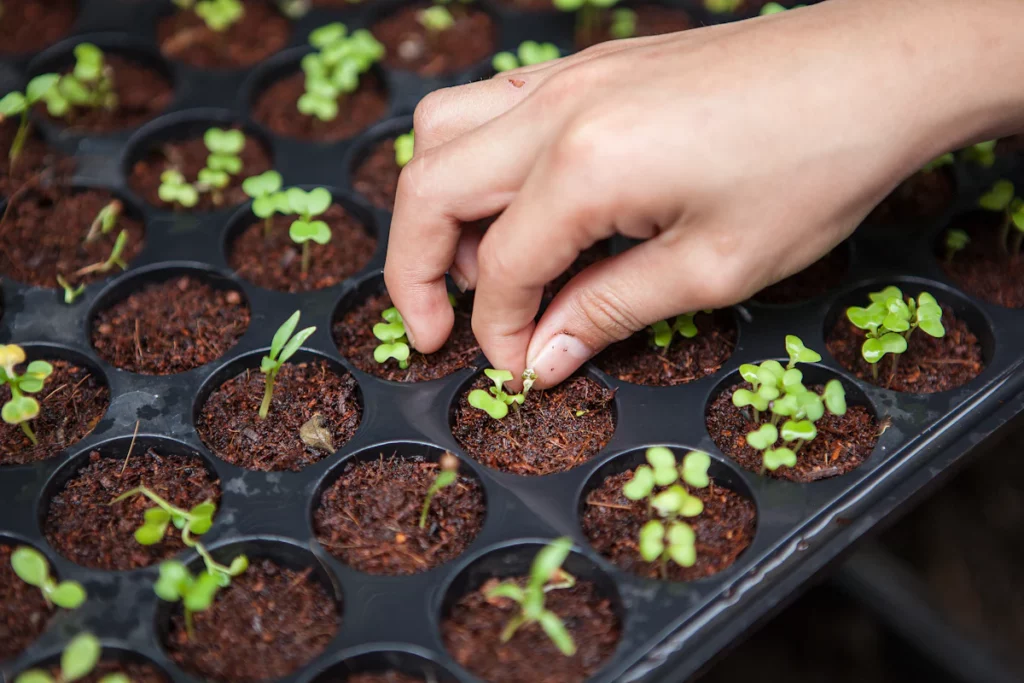
Fresh herbs at the grocery store are expensive, often wilted by the time you use half the bunch, and almost never available in cold months. Growing them indoors solves all three problems if you choose species that actually thrive without a backyard or a south-facing window. This guide ranks the eight most reliable herbs for year-round apartment growing, with light and water requirements based on university extension research and a tested combination that fits a single vertical pipe or smart garden.
The Quick Answer
- Top 8 herbs for year-round indoor growing: basil, mint, chives, parsley, oregano, thyme, cilantro, and rosemary.
- Minimum light: 4 to 6 hours of indirect bright light per day.
- Hardest to kill: mint, chives, and oregano.
- Hardest to grow indoors: rosemary and cilantro (cilantro bolts quickly, rosemary prefers dry air).
1. Basil
Basil is the most popular indoor herb and one of the most rewarding. Genovese is the classic Italian variety, but Thai basil, lemon basil, and purple basil all grow well indoors. Basil needs warm temperatures (above 65 degrees Fahrenheit) and 6 hours of bright indirect light to produce strong flavor. Pinch the flowering tops as soon as they appear to keep the plant producing leaves for 6 to 12 months.
2. Mint
Mint is the most forgiving herb you can grow indoors. Spearmint and peppermint tolerate low light, low humidity, and inconsistent watering. The aggressive growth that makes mint a problem in outdoor gardens becomes an advantage indoors: a single plant produces leaves for years. Grow it in its own container so it doesn’t crowd out neighbors.
3. Chives
Chives are perennial bulbs that produce for years indoors with almost no care. They tolerate low light better than any other edible allium. Snip the hollow stems with scissors about an inch above the soil; the plant regrows within two weeks. The lilac-pink flower heads are also edible.
4. Parsley
Both flat-leaf (Italian) and curly parsley grow well in apartments with 4 to 6 hours of indirect light. Parsley is slow to germinate (up to 3 weeks from seed), so start with a young transplant. Harvest outer stems first; the center keeps producing for 8 to 12 months before going to seed.
5. Oregano
Greek oregano prefers slightly dry conditions, which makes it an unusually good fit for apartments with dry winter heat. Place it in the brightest spot you have and water only when the top inch of soil feels dry. Pick stems above a leaf node; new growth branches outward and the plant fills out gradually over months.
6. Thyme
English thyme is a small, woody perennial that grows slowly but produces year-round once established. It prefers the same conditions as oregano: bright light, slightly dry soil, and good air circulation. According to University of Florida IFAS Extension, thyme rarely outgrows a small pot, making it ideal for tight apartment setups.
7. Cilantro
Cilantro is the trickiest of the common kitchen herbs to grow indoors. It bolts (goes to seed) quickly in warm temperatures and direct sun. Choose slow-bolt varieties (Slow Bolt or Long Standing) and grow in cooler rooms. Plan on succession-sowing fresh seeds every 3 to 4 weeks for continuous harvest.
8. Rosemary
Rosemary is the hardest perennial herb to keep alive indoors. It dislikes humid air, soggy roots, and low light. Choose a compact variety (Tuscan Blue or BBQ) and give it the brightest possible window with airflow from an open window or small fan. Water sparingly: rosemary tolerates drought far better than overwatering.
How to Combine Them in One Vertical Garden
For a 16-slot PVC pipe or a 9-pod smart garden, a balanced selection looks like:
- 3 slots: basil (different varieties for visual interest)
- 2 slots: mint (kept isolated in its own section)
- 2 slots: parsley
- 2 slots: chives
- 2 slots: oregano
- 2 slots: thyme
- 2 slots: cilantro (succession plantings)
- 1 slot: rosemary (or skip if your light is limited)
Sources and References
- Cornell Cooperative Extension
- University of Florida IFAS Extension
- North Carolina State Extension Gardener Handbook
- USDA Urban Agriculture
Frequently Asked Questions
How often should I water indoor herbs?
Most need watering when the top half inch of soil feels dry. Basil and mint prefer slightly more frequent watering; oregano, thyme, and rosemary prefer less.
Can I grow all eight in one container?
Yes, in a vertical setup with separate holes. Mint should always be in its own section because it spreads aggressively.
Do I need a grow light?
If your brightest spot gets less than 4 hours of indirect light per day, yes. A 20-watt LED on a timer for 12 hours costs about $1-2 per month in electricity.
How long do indoor herbs last?
Annuals like basil and cilantro last 6 to 12 months. Perennials like mint, chives, oregano, thyme, and rosemary can produce for 2 to 5 years indoors with minimal care.
This article was researched and fact-checked by Lena Hartwell and the Nexamundo editorial team. Last reviewed on May 19, 2026.