Climbing edible plants — vines — turn a vertical garden into a productive food wall. Six specific edible vines work especially well indoors in apartment-scale vertical setups. This guide covers each one’s growth habit, light needs, and yield expectations.

The Quick Answer
- Top 6 edible vines: cherry tomatoes, snap peas, beans (bush varieties), cucumber (dwarf), passion fruit (indoor varieties), and Malabar spinach.
- Easiest: peas and Malabar spinach.
- Most productive: cherry tomatoes (1-2 lbs per plant per season).
- Best for tight spaces: Malabar spinach (compact compared to outdoor cousins).
1. Cherry Tomatoes
Indeterminate (vining) cherry tomato varieties produce continuously for 4-6 months indoors. Needs bright south-facing window or grow light. Stake or trellis is essential. Best varieties for indoor: Sweet 100, Sun Gold, Tiny Tim.
2. Snap Peas / Sugar Peas
Fast-growing climbing peas reach harvest in 60-70 days. Tolerant of cool indoor temperatures. Produces edible pods for 6-8 weeks before declining. Replant in fall and spring.
3. Bush Beans (Climbing Varieties)
Pole beans climb 4-6 feet on a trellis. Each plant produces 1-2 lbs of beans over 8-10 weeks. Needs strong support and bright light.
4. Dwarf Cucumber
Mini varieties (Spacemaster, Bush Champion, Salad Bush) grow on a trellis to about 3-4 feet. Each plant produces 5-10 cucumbers per season. According to University of Florida IFAS Extension, dwarf cucumbers adapt particularly well to indoor vertical setups.
5. Passion Fruit (Indoor Varieties)
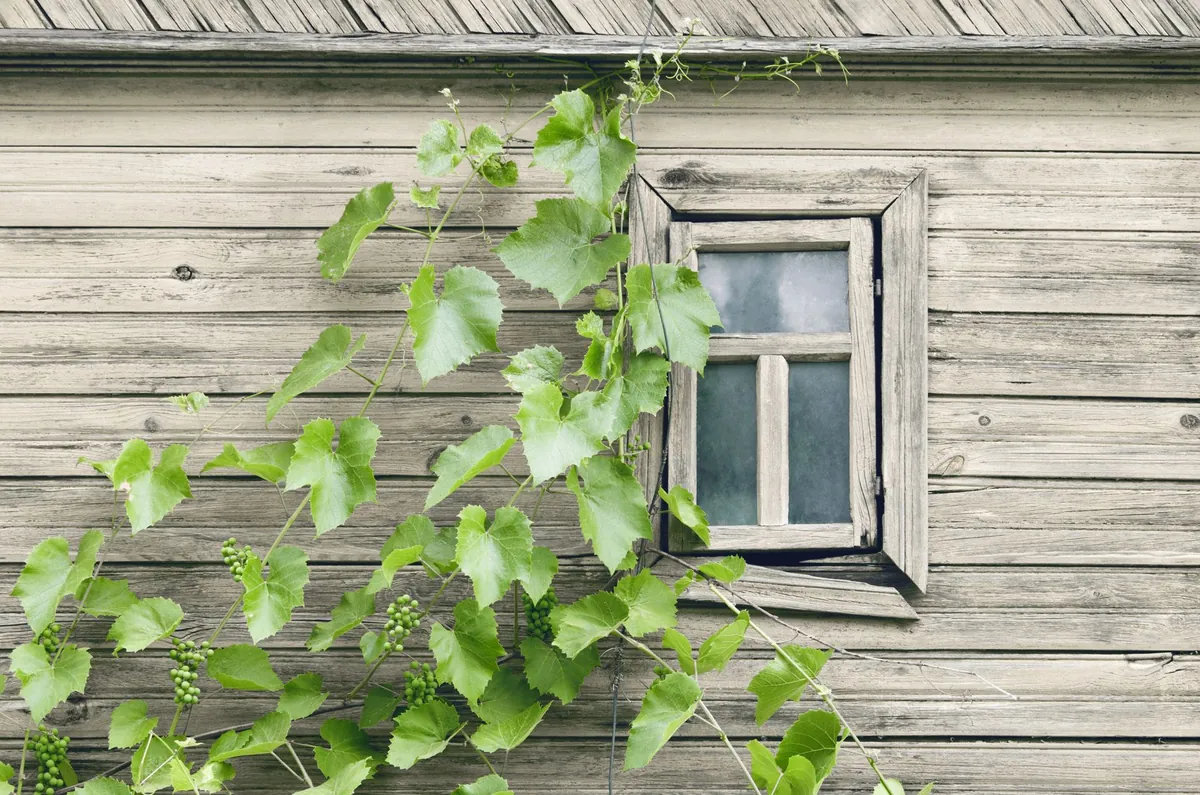
Some compact passion fruit varieties grow indoors in large pots. Slow to fruit (12-18 months) but ornamentally beautiful. Best for growers who want long-term decorative + edible plants.
6. Malabar Spinach
Not a true spinach but a tropical climbing leafy green with thick succulent leaves. Heat-loving (perfect for indoor summer growing). Grows fast on a trellis, providing leaves continuously for 4-6 months. Mild spinach-like flavor.
Trellising Indoor Vines
All six need vertical support. Options:
- Tension rod with twine running vertically.
- Stake-and-string trellis attached to the planter.
- Wall-mounted lattice (with renter-friendly Command strips).
- Hanging string from the ceiling.
Sources and References
- University of Florida IFAS Extension
- Cornell Cooperative Extension
- USDA Urban Agriculture
- North Carolina State Extension
Frequently Asked Questions
How much light do edible vines need?
Most need 6-8 hours of bright indirect light or equivalent grow light. Cherry tomatoes and cucumbers especially light-hungry.
Can I grow these without trellises?
Climbing varieties need support; bush varieties don’t. Choose accordingly based on your space.
How often do edible vines need fertilizer?
Every 2-3 weeks during active growth. Use balanced liquid fertilizer at half-strength.
Do they need pollination indoors?
Tomatoes, cucumbers, and passion fruit need hand-pollination indoors (gentle brush transfer between flowers).
This article was researched and fact-checked by Lena Hartwell and the Nexamundo editorial team. Last reviewed on May 19, 2026.