Most “indoor garden” plant lists assume you have at least one south-facing window with hours of direct sun. If you live in a city apartment, you probably don’t. You have a north-facing window, a deep-set sill that catches reflected light, or maybe a kitchen wall with bright lighting only at night. The good news is that at least ten edible and ornamental plants grow well in those conditions, with the right vertical setup. This guide picks the ten I have personally killed the fewest times.
The Quick Answer
- Best 10 plants for low-light vertical apartment gardens: mint, parsley, chives, loose-leaf lettuce, spinach, arugula, microgreens, sorrel, mâche, and mizuna.
- Minimum light: roughly 4 hours of indirect bright light per day.
- Time to first harvest: 10 days (microgreens) to 8 weeks (sorrel).
- Hardest to kill: mint, chives, and microgreens.
How Low is “Low Light,” Really?
Light for indoor plants is usually described in vague terms (full sun, bright indirect, low light), but the underlying measurement is foot-candles or lux. According to Cornell Cooperative Extension, “low light” generally means 50 to 250 foot-candles, which is roughly the brightness 3 to 6 feet away from a north-facing window in a city.
1. Mint
Mint is the plant I recommend to every beginner. It is nearly impossible to kill, grows fast, and tolerates very low light, low humidity, and inconsistent watering. In a vertical garden it bushes out within 4 weeks and starts producing harvestable leaves. Plant it in its own hole, because mint is aggressive and will crowd out neighbors.
2. Parsley
Both flat-leaf (Italian) and curly parsley do well in vertical gardens with 4 to 6 hours of indirect light. Parsley is slow to germinate (up to 3 weeks from seed), so start with a young transplant. Harvest outer stems first; the center keeps producing for months.
3. Chives
Chives are perennials and live for years indoors with minimal care. They tolerate low light better than almost any other edible allium. Snip with scissors about an inch above the soil and they regrow within two weeks. The lilac flowers are also edible.
4. Loose-Leaf Lettuce
Skip head lettuce for vertical setups. Loose-leaf varieties like Black Seeded Simpson, Salad Bowl, and Oakleaf grow as a loose rosette and tolerate 4 hours of indirect light. Seed to first harvest in about 30 days.
5. Spinach
Spinach prefers cool temperatures and low light, which makes it a strong fit for indoor winter gardens. Smooth-leaf varieties like Bloomsdale Long Standing handle indoor conditions best. First harvest in about 4 to 5 weeks.
6. Arugula
Arugula is the fastest leafy green on this list. It goes from seed to baby-leaf harvest in 21 days. Sow new seeds every two weeks for a continuous harvest.
7. Microgreens (Mixed)
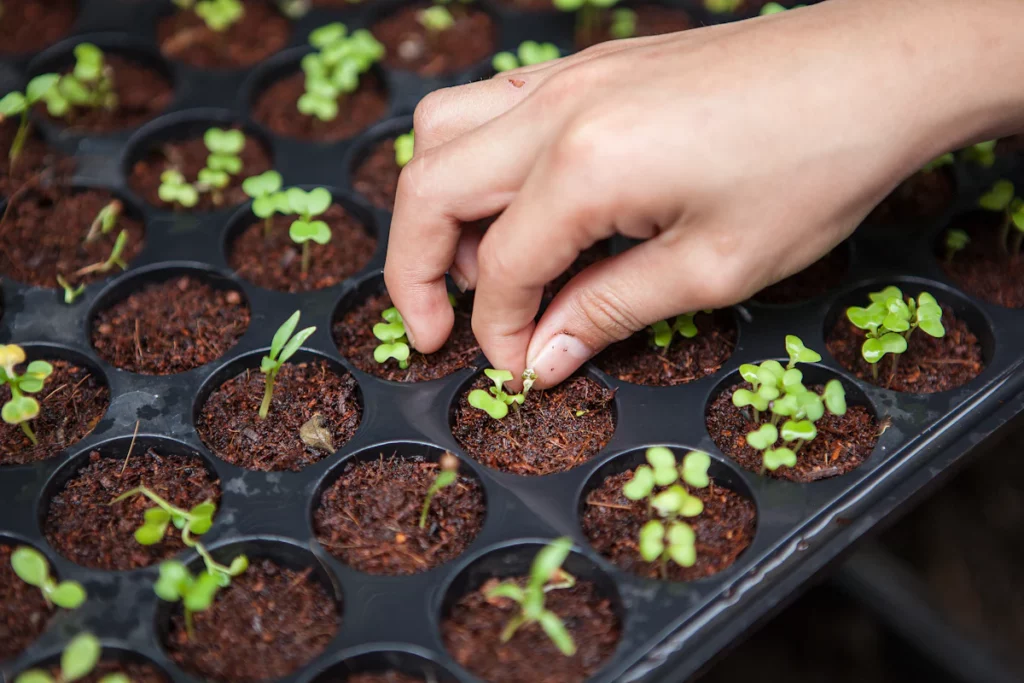
Microgreens are seedlings harvested 7 to 14 days after sowing. Almost any leafy green or herb works. According to a 2012 study from the USDA Agricultural Research Service, microgreens contain 4 to 40 times the nutrient density of mature leaves of the same species.
8. Sorrel
Sorrel is an underrated lemony-flavored leafy green that grows in deep shade. Slow to start (6 to 8 weeks from transplant to first harvest), then keeps producing for years.
9. Mâche (Corn Salad)
Mâche, also called corn salad, is a cold-season green with mild, nutty flavor. Harvest the entire rosette at once, around 6 weeks from seed. Re-sow regularly for continuous supply.
10. Mizuna
Mizuna is a Japanese mustard green with feathery leaves and a mild peppery taste. Tolerates low light and grows in about 35 days from seed to first cut. Mixes well with arugula and loose-leaf lettuce.
How to Combine These in One Vertical Garden
For a 16-hole PVC vertical garden, here is a tested combination:
- 4 holes: loose-leaf lettuce
- 3 holes: arugula
- 2 holes: spinach
- 2 holes: mint (contained in their own corner)
- 2 holes: parsley
- 1 hole: chives
- 1 hole: mizuna
- 1 hole: sorrel (for long-term harvesting)
When to Add a Grow Light Anyway
If your only window faces a brick wall or you only get 1 to 2 hours of indirect light, even shade-tolerant species will struggle. A small LED grow light on a timer (10 hours per day) costs $15 to $30. The U.S. Department of Energy notes that modern LEDs use roughly 75 percent less energy than incandescent or fluorescent bulbs, so the electricity cost of running a small grow light indoors is under $2 per month.
Sources and References
- Cornell Cooperative Extension
- Xiao, Z., et al. (2012)
- University of Florida IFAS Extension
- U.S. Department of Energy — LED Lighting
Frequently Asked Questions
Can I really grow lettuce with no direct sunlight?
Yes, as long as the location has consistent indirect bright light for 4 to 6 hours per day.
How often should I rotate the plants?
Once a week, rotate the entire pipe a quarter turn so each side gets equal light over time.
What if my apartment has no window at all?
You will need a grow light. The smallest practical setup is a 20-watt LED on a timer for 12 hours a day.
Can I grow tomatoes or peppers in low light?
No. Fruiting plants need 6 to 8 hours of direct sunlight or equivalent grow-light intensity.
Easiest plant for a first-timer?
Mint. It tolerates almost everything: inconsistent watering, low light, missed feedings, and forgotten weeks.
This article was researched and fact-checked by Lena Hartwell and the Nexamundo editorial team. Last reviewed on May 19, 2026.
Disclaimer: if you have plant allergies, are pregnant, or are growing food for children, consult a registered dietitian or your local agricultural extension service.