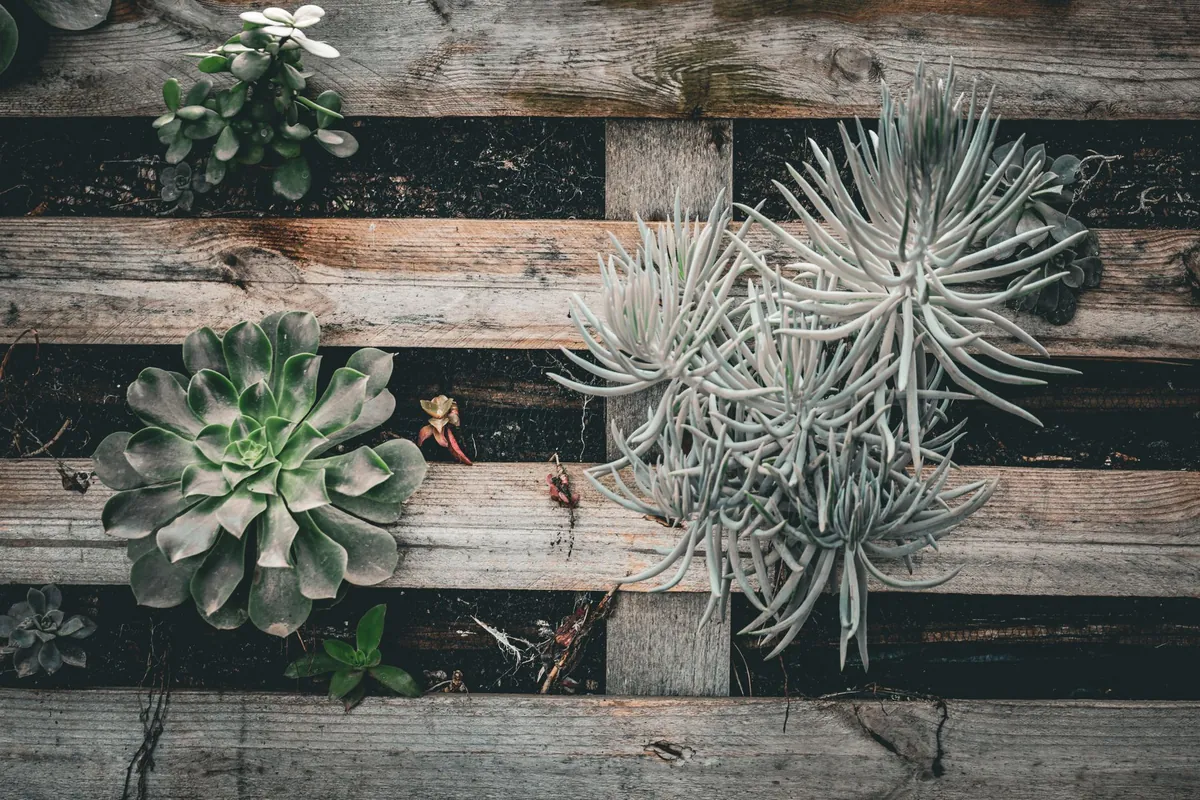
A wooden pallet leaning against the wall, modified into a self-watering vertical garden, is one of the most rewarding DIY projects for apartment growers who want a substantial setup at low cost. Free pallets are widely available; a few dollars in landscape fabric and potting mix turns one into a 12-plant vertical garden with a sealed reservoir. This guide walks through the build.
The Quick Answer
- Total cost: $20-$35 (pallet is free).
- Build time: 4-5 hours including drying time.
- Plant capacity: 12-15 plants.
- Reservoir capacity: 10-14 days of water.
- Best plants: herbs, lettuce, strawberries, trailing plants.
Sourcing the Pallet
Free pallets are available at most warehouses, big-box stores, and through online marketplaces. Look for the IPPC stamp with “HT” (heat-treated, safe) and avoid “MB” (methyl bromide treated, toxic). According to EPA wood reuse guidance, untreated or heat-treated pallets are safe for indoor food growing.
Materials
- 1 free wooden pallet (HT stamp).
- Landscape fabric (3-4 yards).
- Staple gun and staples.
- Plastic sheeting (to line the reservoir).
- Lightweight potting mix.
- Sandpaper.
- Outdoor-grade wood sealer (food-safe).
Step 1: Inspect and Sand the Pallet
Remove any nails sticking out. Sand the entire pallet with medium-grit sandpaper to remove splinters. Apply a coat of food-safe outdoor wood sealer; let dry 24 hours.
Step 2: Line the Back
Staple plastic sheeting to the back side of the pallet to create a sealed back wall. This prevents water from seeping through and forms the bottom of your future reservoir.
Step 3: Create Planting Pockets
Staple landscape fabric between each pallet slat to form pockets that hold soil. Each pocket holds 2-3 cups of potting mix and one plant.
Step 4: Fill with Potting Mix and Plant
Fill each pocket with lightweight container potting mix. Insert seedlings of herbs or leafy greens. The pallet leans against the wall at about 75 degrees; the slight backward tilt keeps soil in the pockets.
Step 5: Set Up the Reservoir
The bottom 6 inches of the pallet (sealed with plastic on the back and bottom) becomes the water reservoir. Fill with water and the wicking action through the bottom plants delivers moisture upward.
Sources and References
- EPA Recycling and Wood Reuse
- USDA Urban Agriculture
- Cornell Cooperative Extension
- University of Florida IFAS Extension
Frequently Asked Questions
How do I find a safe pallet?
Look for the IPPC stamp marked “HT” (heat-treated, safe). Avoid “MB” (chemically treated). Untreated unstamped pallets from food sources are also safe.
Will the wood rot indoors?
With proper sealing and a plastic-lined reservoir, an indoor pallet garden lasts 3-5 years before showing wear.
Can I paint the pallet?
Yes — use food-safe non-toxic paint or stain.
How do I refill the reservoir?
Pour water carefully into the top pockets; gravity carries it down to the reservoir.
This article was researched and fact-checked by Lena Hartwell and the Nexamundo editorial team. Last reviewed on May 19, 2026.
Safety note: never use pallets treated with methyl bromide or unknown chemicals. Always verify the IPPC stamp. Wear safety glasses when sanding wood.